
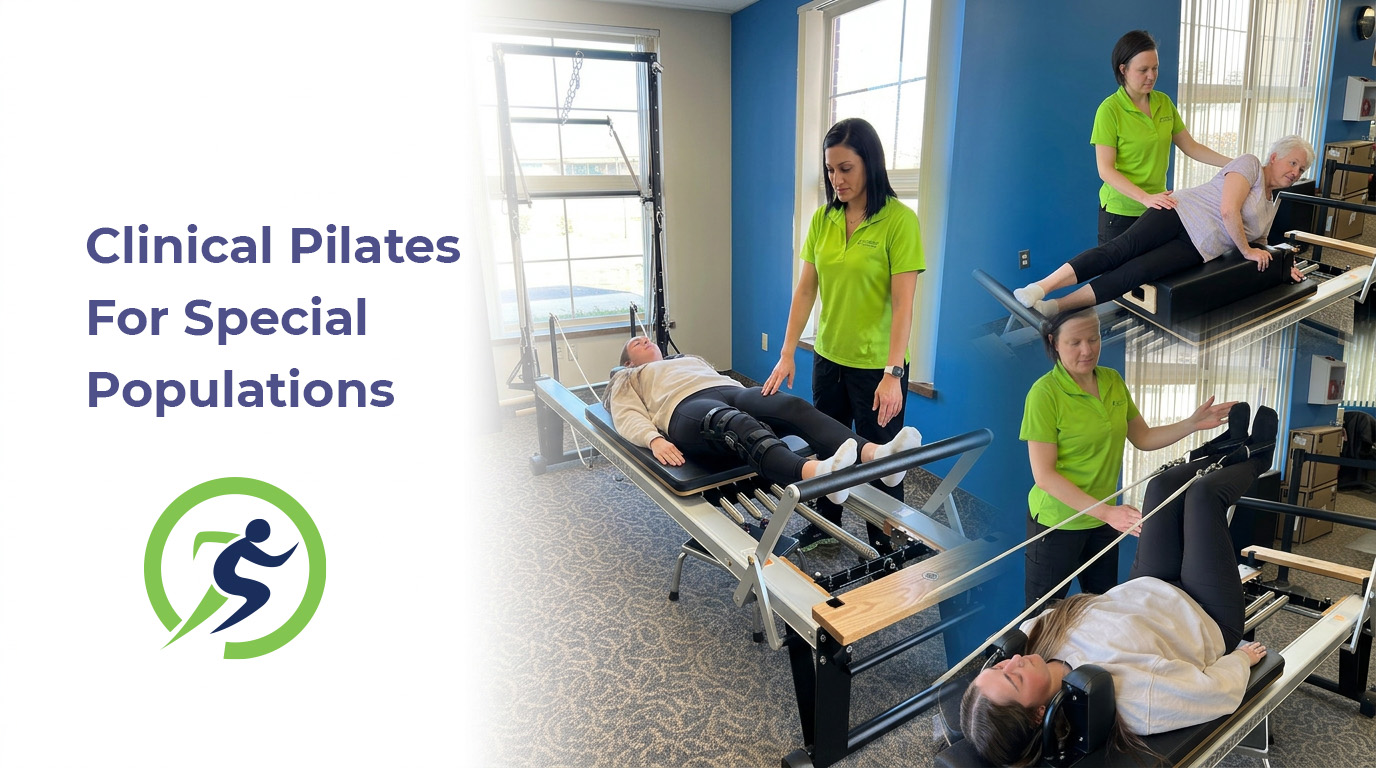
A Safe, Personalized Approach to Movement
By Jessica Keown, PTA, with David Steinberg, Senior Writer, PTRM
In this article:
Quick Facts About Knee Pain & Clinical Pilates
Clinical Pilates is a highly adaptable form of exercise that can be tailored to individuals with pain, mobility limitations, pregnancy-related changes, age-related concerns, neurological conditions, and post-surgical recovery needs. Unlike traditional fitness classes, Clinical Pilates is designed around the individual’s medical history, physical abilities, rehabilitation goals, and current movement tolerance.
At Orthopaedic Team Rehabilitation Physical Therapy, Clinical Pilates is often integrated into physical therapy programs to help patients improve strength, balance, flexibility, coordination, and confidence in movement. Through careful assessment and individualized progression, patients can participate safely while working toward meaningful functional goals.
What makes clinical Pilates different for special populations?
Clinical Pilates is different because the exercises are selected, modified, and progressed around the patient rather than the other way around. A person recovering from surgery, managing osteoporosis, or exercising during pregnancy may need a different pace, range of motion, resistance level, and setup than someone taking a standard mat class. This is why special populations Pilates focuses on assessment, communication, and careful progression instead of simply following a pre-set routine.
In a clinical setting, movement is often broken down into manageable parts. The practitioner may look at posture, breathing, joint mobility, balance, strength, and how symptoms respond during and after exercise. That information helps shape a plan that is challenging enough to create progress but gentle enough to respect the body’s current limits.
Clinical Pilates can be particularly effective when incorporated into a physical therapy program. By combining evidence-based rehabilitation principles with controlled Pilates movement, patients can improve motor control, strength, flexibility, balance, and body awareness while remaining mindful of specific medical considerations and recovery goals.
A patient-centered approach begins with safety
The safest Pilates plan starts with a clear understanding of the person in front of the practitioner. Special populations often need more than simple exercise modifications; they need thoughtful decisions about positioning, load, tempo, fatigue, pain response, and recovery time. A movement that feels helpful for one person may be inappropriate for another, even if they share the same diagnosis.
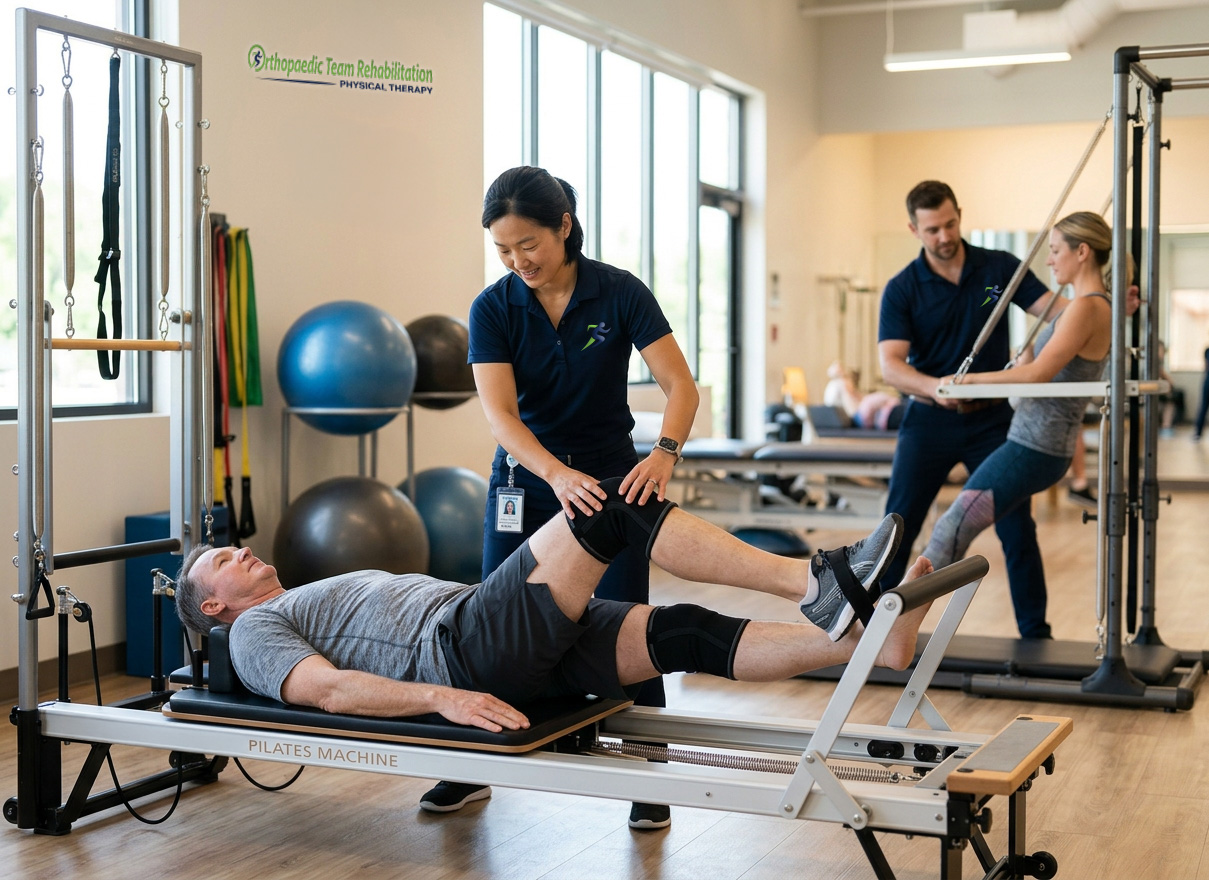
A clinical Pilates session may include mat-based work, spring resistance, small props, or Pilates reformer physical therapy exercises. The reformer can be helpful because it offers support, feedback, and adjustable resistance, but it should still be used with clear goals. The equipment itself is not what makes a session clinical; the reasoning behind the exercise selection does.
A safe plan often considers:
- Medical history: surgeries, bone density concerns, neurological diagnoses, pregnancy status, medications, and relevant precautions.
- Current symptoms: pain level, stiffness, weakness, balance changes, fatigue, dizziness, or numbness.
- Movement tolerance: which positions are comfortable, which movements increase symptoms, and how long the body can work before fatigue affects form.
- Functional goals: walking, lifting, returning to sport, caring for a child, working at a desk, or improving daily mobility.
- Progression strategy: when to increase resistance, add complexity, change positions, or introduce more demanding balance work.
Pilates for older adults supports strength, balance, and confidence
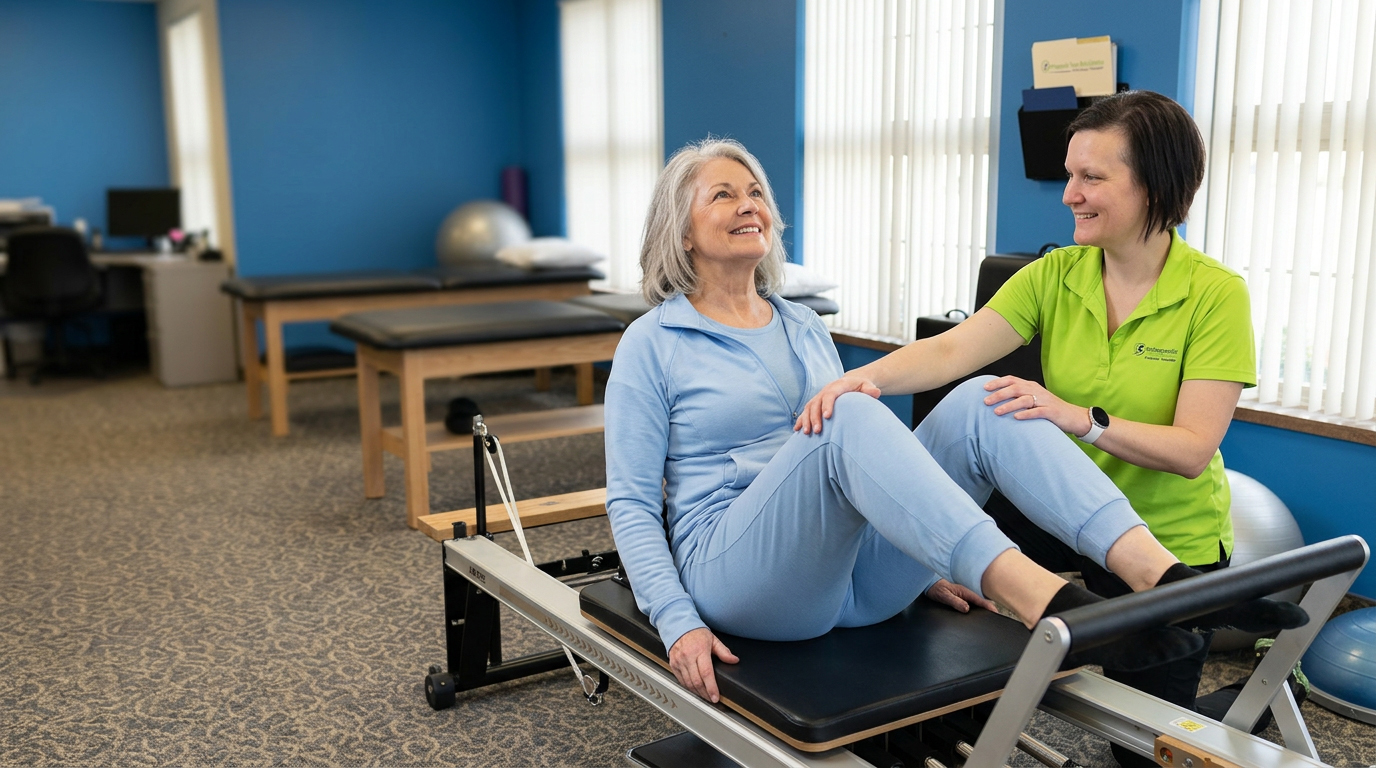
Pilates for older adults can be a practical way to build strength without relying on high-impact exercise. Many older adults benefit from controlled movements that emphasize posture, breathing, spinal mobility, hip strength, and balance. These qualities matter not only in the studio but also during everyday tasks such as climbing stairs, getting out of a chair, carrying groceries, or walking on uneven ground.
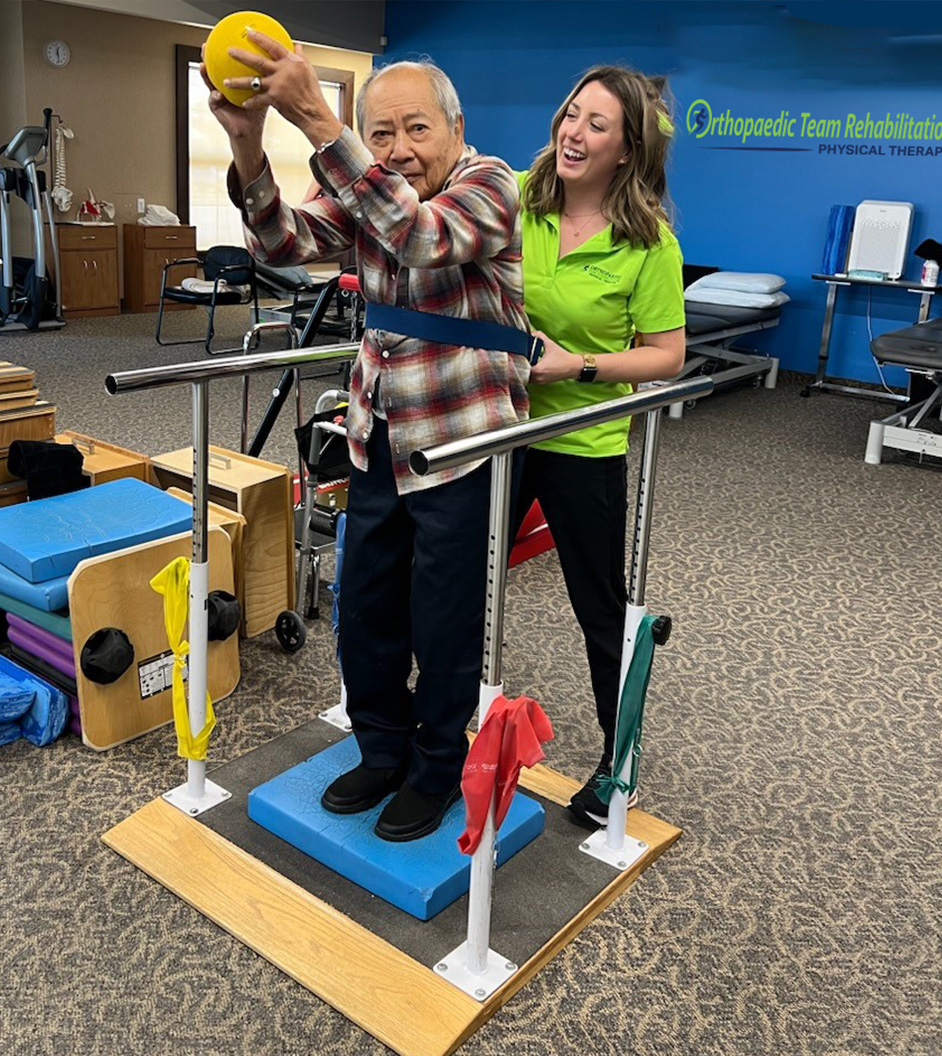
A clinical approach may include seated exercises, supported standing work, gentle reformer movements, and mat exercises modified with cushions or props. The goal is not to make every person perform the most advanced version of an exercise. The goal is to help each person move with better control, less fear, and more independence.
For people at risk of falls, the pace of progression is especially important. Exercises may begin with stable support and gradually add challenges such as shifting weight, changing direction, or coordinating arm and leg movements. Small improvements in confidence can make a meaningful difference in whether someone feels safe staying active.
How can Pilates help with low back pain and chronic pain?
Pilates for low back pain may help by improving awareness, trunk control, hip mobility, breathing mechanics, and movement confidence. Pilates for chronic pain can also give patients a structured way to explore movement without pushing into aggressive or fear-based exercise. The emphasis is usually on calm control, gradual exposure, and learning how the body responds.
Low back pain is rarely solved by one “perfect” exercise. Some people need to reduce stiffness, while others need better strength, endurance, or coordination. Clinical Pilates allows the practitioner to adjust the plan based on whether flexion, extension, rotation, prolonged sitting, or standing affects symptoms.
For chronic pain, the emotional side of movement matters too. Patients may worry that pain always means damage, or they may avoid activities that once caused a flare. A measured Pilates program can help rebuild trust by starting with tolerable movements and progressing only when the body is ready.
Helpful strategies may include:
- Start with comfortable ranges. Smaller movements can build control before larger ranges are introduced.
- Use breath to reduce guarding. Breathing can help patients soften unnecessary tension and coordinate movement.
- Train the hips and trunk together. Back comfort often improves when the pelvis, hips, and spine share the workload.
- Monitor the after-effect. How the body feels later that day or the next morning is important feedback.
- Progress slowly but consistently. Chronic pain often responds better to steady exposure than sudden intensity.
Prenatal and postnatal Pilates require thoughtful modification
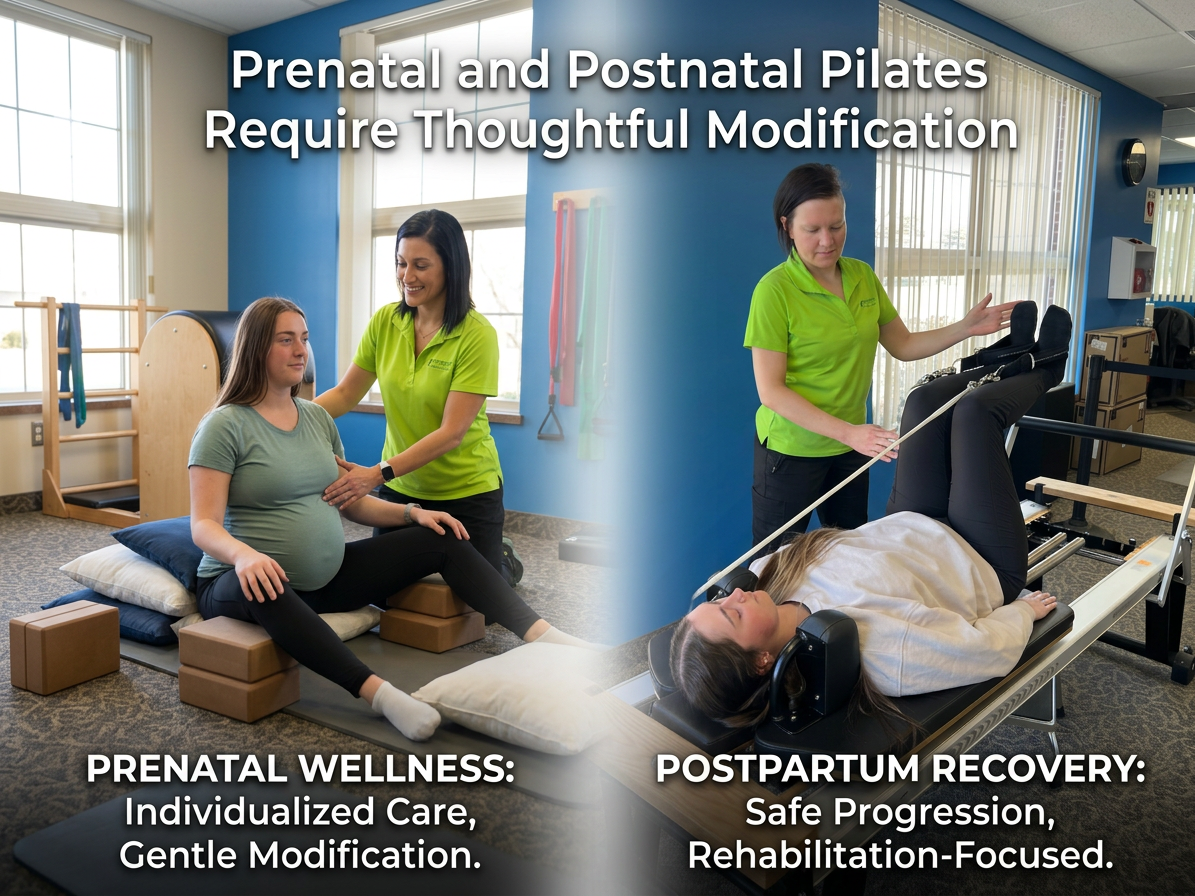
Prenatal Pilates can support strength, posture, pelvic control, breathing, and body awareness during pregnancy. Because the body changes across trimesters, the exercise plan should change too. Comfort, energy levels, balance, joint sensitivity, and medical guidance all influence which positions and movements are appropriate.
A prenatal plan may include side-lying work, supported standing exercises, seated movements, and gentle resistance training. The focus is often on maintaining strength, supporting the hips and pelvis, and preparing the body for the physical demands of birth and early caregiving. Exercises should feel supportive, not punishing.
Postnatal Pilates is different again. After birth, many people are rebuilding strength while also dealing with fatigue, feeding postures, lifting demands, and possible pelvic floor or abdominal wall changes. A careful postnatal program may begin with breathing, gentle core coordination, mobility, and gradually progressive strengthening. Returning to advanced abdominal work or high-load movement too quickly can be frustrating, so the plan should respect healing and individual readiness.
Pilates for osteoporosis focuses on posture and bone-safe movement
Pilates for osteoporosis can be beneficial when exercises are selected with bone health precautions in mind. The priority is usually to support posture, back extensor strength, hip strength, balance, and safe movement habits. Because some spinal positions may not be appropriate for certain individuals with low bone density, a clinical approach is important.
Rather than relying on repeated loaded spinal flexion or extreme twisting, the session may emphasize upright alignment, controlled hip hinging, gentle extension-based strength, and supported resistance work. Patients can also learn how to move more safely outside the studio, such as lifting from the hips, turning with control, and avoiding rushed transitions.
Balance training is another key part of Pilates for osteoporosis. A fall can have serious consequences for someone with fragile bones, so building stability and reaction confidence matters. Exercises should be adapted to the person’s ability, using support when needed and progressing carefully.
Can Pilates support neurological conditions?
Pilates for neurological conditions can support coordination, balance, strength, posture, and body awareness, but the plan must reflect the specific diagnosis and presentation. People with neurological conditions may experience changes in tone, sensation, fatigue, gait, coordination, or reaction time. Clinical Pilates can be useful because it allows movements to be slowed down, supported, repeated, and adapted.
For some patients, the focus may be on symmetrical movement and postural control. For others, it may involve improving transitions, practicing weight shifts, or building endurance without over-fatiguing the nervous system. Clear cues, consistent setups, and repetition can help patients feel more secure and engaged.
Progress should be realistic and patient-specific. Some goals may be functional, such as standing up with better control or walking with more confidence. Others may be about maintaining mobility, reducing stiffness, or feeling more connected to the body.
Pilates after surgery and during rehabilitation
Pilates after surgery should always respect medical clearance, tissue healing timelines, and any movement restrictions provided by the surgical or rehabilitation team. Once appropriate, Pilates for rehabilitation can help patients rebuild strength, mobility, coordination, and confidence in a gradual way. It can bridge the gap between early rehab exercises and a fuller return to daily activity.
After orthopedic surgery, for example, the plan may focus on restoring range of motion, reintroducing load, and improving movement patterns. After abdominal, pelvic, or other procedures, the early focus may be gentler, with attention to breathing, posture, and safe transitions. The exact program depends on the surgery, the stage of healing, and the patient’s response.
Clinical Pilates is especially useful during rehabilitation because it can be scaled. A person can begin with supported, low-resistance movements and progress toward more complex exercises as strength and control return. This helps reduce the all-or-nothing mindset that often makes recovery feel discouraging.
Signs of a well-designed clinical Pilates plan
A good plan should feel personal, purposeful, and adjustable. It should not be a random collection of exercises or a one-size-fits-all class with a few quick modifications. Patients should understand why they are doing each movement and how it connects to their goals.
Look for these signs:
- The session begins with questions about symptoms, goals, and recent changes.
- Exercises are modified when pain, fatigue, balance, or form changes.
- Progressions are introduced gradually, not forced for the sake of difficulty.
- The practitioner explains what to notice during and after movement.
- The plan supports daily function, not just studio performance.
- Communication with healthcare providers is encouraged when needed.
Patients should also feel comfortable speaking up. Clinical Pilates works best when the person moving and the person guiding the session share feedback openly. Pain, fear, fatigue, and uncertainty are all useful information, not inconveniences.
The takeaway: personalized movement helps more people participate
Clinical Pilates gives special populations a safer, more individualized path into movement. Whether the goal is managing pain, staying active during pregnancy, rebuilding after surgery, improving balance with age, or supporting neurological function, the most important principle is personalization.
Pilates is not automatically appropriate simply because it is low impact. It becomes meaningful when the exercises are chosen with care, progressed with patience, and connected to the patient’s real life. With the right guidance, Pilates for rehabilitation can help people move with more confidence, more control, and a clearer sense of what their bodies can do.
Frequently Asked Questions About Clinical Pilates
If you are recovering from an injury, managing a chronic condition, seeking safer exercise options, or looking to improve strength, balance, mobility, and movement confidence, Clinical Pilates may be an excellent option. A consultation with a physical therapist or Clinical Pilates provider can help determine whether it fits your specific needs and goals.
Pilates was originally developed by Joseph Pilates in the early 20th century as a rehabilitation-focused exercise system. During World War I, he used specialized equipment and controlled movement techniques to help injured patients and bedridden individuals maintain strength and recover physical function, principles that continue to influence Clinical Pilates today.
No prior Pilates experience is necessary. Clinical Pilates is designed for beginners and experienced exercisers alike. Your program starts at your current ability level and progresses at a pace appropriate for your goals and condition.
Clinical Pilates may incorporate mat exercises, resistance bands, small props, stability equipment, and Pilates reformers. The equipment is simply a tool; the most important factor is how exercises are selected and adapted to meet your individual needs
Clinical Pilates can be beneficial for many individuals with osteoporosis when exercises are selected carefully. Programs typically emphasize posture, balance, strength, and safe movement strategies while avoiding positions that may place unnecessary stress on vulnerable bones.
Absolutely. Clinical Pilates can help older adults improve strength, balance, flexibility, posture, coordination, and confidence with movement. Exercises can be modified to accommodate mobility limitations while supporting independence and fall prevention.
Yes. Postnatal Clinical Pilates can help rebuild core strength, improve posture, restore mobility, and address the physical demands of lifting, carrying, feeding, and caring for a new baby. Programs should be tailored to each individual’s recovery and healing process.
Clinical Pilates can often be safely adapted during pregnancy. Exercises are modified throughout each trimester to accommodate physical changes, improve posture, support pelvic stability, and maintain strength. All prenatal exercise programs should follow the recommendations of your healthcare provider.
Often, yes, once you have received appropriate medical clearance. Clinical Pilates can be incorporated into rehabilitation following many orthopedic and other surgical procedures to help rebuild strength, restore mobility, improve coordination, and support a gradual return to normal activities.

Leave A Comment