

PT For Balance and Strength Promotes Enhanced Mobility, Reduces Fall Risk, and Builds Confidence

Summary
The fear of falling is one of the most common complaints of our older patients. That’s because they know it frequently leads to hospitalization, loss of independence, and even death.
Fall Risk Is Progressive, But PT Can Reduce and Even Reverse It
Unfortunately, aging is a natural process we all must face. As a result, most of us learn to come to terms with the changes in our body as time goes by. That includes accepting the progressive risk of falls. However, as a physical therapist who has treated hundreds of patients for balance and fall prevention, I want you to know that you can prevent many falls by learning more and following a prevention plan.
Statistics Impacting The Urgency Of Preventing Falls
Here are some of the latest statistics on age-related falls from the Centers for Medicare & Medicaid Services (CMS) and the Centers for Disease Control and Prevention (CDC):
- Prevalence: Over 14 million adults aged 65 and older report falling each year in the United States, which is about 1 in 4 older adults.
- Injuries: Approximately 37% of those who fall report an injury that requires medical treatment or restricts their activity for at least one day, resulting in an estimated 9 million fall injuries annually.
- Fatalities: Falls are the leading cause of injury-related death among adults aged 65 and older.
The age-adjusted fall death rate increased by 41% from 55.3 per 100,000 older adults in 2012 to 78.0 per 100,000 older adults in 2021.
These statistics highlight the significant impact of falls on older adults and underscore the importance of fall prevention measures.
What Is Sarcopenia And Why Should I Care?
As we age, many of us will experience sarcopenia. Sarcopenia is the loss of muscle tissue, and can begin as early as 40 years old. Evidence suggests that muscle mass and strength both decline with up to 50% being lost by age 80. This is often associated with a loss of function, acute and chronic disease, increased insulin resistance, fatigue, falling, mortality and disability.
As far as strength is concerned, most older adults who are sedentary demonstrate a 1% decline in strength at age 50, and a 3% decline in muscular strength at age 70. Older adults are the least physically active of all age groups with only 11% of individuals over the age of 65 reporting that they engage in aerobic and strengthening activities in compliance with ACSM (American College of Sports Medicine) recommendations.
Frequently Asked Questions About Fall Prevention and Physical Therapy
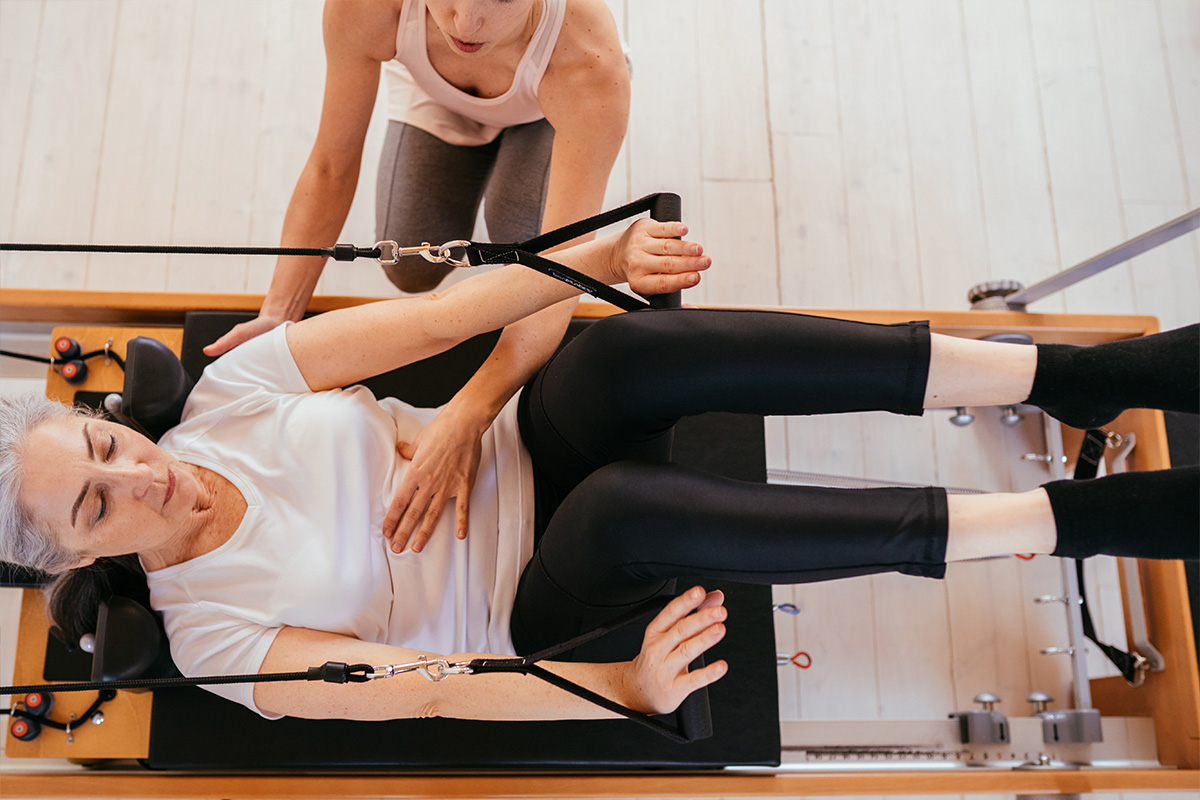
Clinical Pilates may benefit individuals who:
- Are recovering from surgery or injury
- Have chronic back, neck, or joint pain
- Want to improve balance and reduce fall risk
- Have osteoporosis or osteopenia
- Are pregnant or recovering after childbirth
- Have neurological conditions affecting movement
- Want to safely improve strength, flexibility, and mobility
Physical therapy programs are individualized and based on a professional assessment of strength, mobility, balance, pain levels, injury history, and functional limitations. Therapists also focus on safety, progression, and fall risk reduction.
In many cases, Medicare may cover medically necessary physical therapy services related to balance deficits, weakness, gait abnormalities, mobility limitations, or fall risk reduction.
Regular movement and exercise are important for maintaining strength and balance. A physical therapist can recommend a safe and personalized program based on individual needs, health history, and mobility levels.
Yes. Physical therapy can help individuals recover strength, mobility, balance, flexibility, and confidence after a fall while addressing factors that may have contributed to the incident.
Older adults experiencing dizziness, weakness, balance problems, difficulty walking, previous falls, or reduced mobility may benefit from a fall prevention assessment by a physical therapist.
Removing loose rugs, improving lighting, installing grab bars, reducing clutter, using supportive footwear, and ensuring clear walking paths may help improve safety at home.
Yes. Fear of falling can lead to less activity and further weakness over time. Physical therapy helps improve movement confidence, balance, and mobility through structured exercise and safety training.
Leg strength, core stability, and overall muscle function are important for maintaining balance and reacting safely to movement changes. Weakness in the lower body is commonly linked to increased fall risk.
Balance training helps improve coordination, reaction time, and stability during daily movements such as walking, climbing stairs, standing up, and changing direction. This may help lower the risk of falls and injuries.
Yes. Physical therapists use targeted balance and coordination exercises to help patients improve body awareness, stability, walking confidence, and overall mobility safety.
Balance exercises, strength training, gait training, flexibility work, posture exercises, and mobility activities can help improve stability and reduce the likelihood of falls.
Common warning signs include difficulty standing up, poor balance, dizziness, frequent tripping, unsteady walking, lower body weakness, reduced confidence while walking, and a history of previous falls.
Physical therapists evaluate balance, mobility, strength, posture, gait, and movement patterns to identify risk factors that may contribute to falls. Treatment programs focus on improving stability, walking ability, coordination, and overall safety.
As people age, changes in strength, balance, coordination, flexibility, vision, joint mobility, and reaction time can increase the likelihood of falls. Certain medical conditions and medications may also contribute to balance problems and instability.






Leave A Comment